
Adult eczema can steal sleep, patience, clothing choices, confidence, and entire workdays before anyone around you understands the cost. New treatment protocols for managing severe eczema in adults have changed because doctors now have better tools than endless steroid refills and vague advice to “avoid triggers.” The newer approach in the USA looks at inflammation, itch, infection risk, skin barrier damage, sleep loss, and mental strain as one connected problem, not separate complaints.
That shift matters because many adults spend years treating the skin they can see while the immune signal beneath it keeps firing. A stronger care plan now may include topical anti-inflammatory medicines, wet-wrap therapy, phototherapy, biologic injections, oral JAK inhibitors, and tighter follow-up with a dermatologist. For patients trying to understand health updates, patient access, and care decisions, trusted healthcare information resources can help make the conversation less confusing before the next appointment.
Severe Eczema Treatment Now Starts With Better Disease Mapping
A modern care plan begins with a harder question than “How bad does the rash look?” Dermatologists now pay closer attention to itch intensity, body surface area, sleep loss, flare frequency, infection history, work disruption, and whether the hands, face, eyelids, neck, or genitals are involved. Two patients can have the same amount of redness and live completely different lives because one sleeps and the other scratches until sunrise.
Why skin appearance alone misleads adults and doctors
Red patches do not always tell the truth. Darker skin may show gray, purple, brown, or thickened areas instead of bright redness, which can lead to undertreatment in adults with skin of color. A patient in Atlanta or Detroit may be told the flare “doesn’t look that bad,” while the itch is wrecking their sleep and leaving raised, rough plaques from repeated scratching.
That is why newer adult protocols use symptom scores, patient reports, and quality-of-life questions alongside the exam. The American Academy of Dermatology says updated guidelines for atopic dermatitis include evidence-based recommendations for moisturizers, topical calcineurin inhibitors, topical corticosteroids, topical PDE-4 and JAK inhibitors, phototherapy, biologics, and oral JAK inhibitors.
A better visit sounds more specific. Instead of saying, “My eczema is bad,” the patient can say, “I wake four nights a week, my hands crack at work, and I have used steroid cream three times this month without staying clear.” That detail changes the treatment ladder because the doctor can see the disease pattern, not only the appointment-day snapshot.
When adults need escalation instead of another cream
Long-term adults often blame themselves when another tube fails. They switch detergents, cut foods, buy expensive lotions, and still flare. The missed point is simple: some disease is too inflamed for skin care alone.
Escalation becomes reasonable when topical treatment cannot hold control, when flares return fast after stopping steroids, when itch blocks sleep, or when repeated infections appear. This does not mean creams failed because the patient used them wrong. It may mean the immune pathway needs a targeted medicine, controlled light therapy, or a safer long-term plan.
The counterintuitive part is that stronger treatment can sometimes reduce total medication burden. A patient who starts a biologic or an oral JAK inhibitor under medical supervision may need fewer rescue steroid courses, fewer urgent visits, and less daily guessing. Good escalation is not aggressive care for its own sake. It is planned care that stops the cycle before the skin breaks again.
Targeted Medicines Are Replacing the Old Trial-and-Error Cycle
Older eczema care often moved slowly: moisturizer, steroid, stronger steroid, antibiotic, repeat. That pattern still helps some adults, but it leaves many moderate-to-severe patients stuck. Newer protocols separate short-term flare control from long-term immune control, which is a major change in adult dermatology.
Biologic therapy for adult eczema patients who need steady control
Biologics are injectable medicines that target specific immune signals involved in atopic dermatitis. Dupilumab, tralokinumab, lebrikizumab, and nemolizumab are examples of targeted biologic options discussed in recent treatment literature, with different immune targets such as IL-4, IL-13, and IL-31 pathways.
For many adults, biologics fit the patient who needs steady control but does not want the broader immune suppression linked with older systemic drugs. A nurse in Phoenix with neck and hand eczema, for example, may need a treatment that lowers flares without making every work shift depend on gloves, ointment, and luck.
Biologics are not instant magic. They can take weeks to show their full value, and insurance approval may require documentation of prior treatment failure. Still, their rise has changed the tone of the conversation. The goal is no longer “live with it and calm flares.” The goal is durable control with fewer crashes.
JAK inhibitors for rapid itch relief and careful monitoring
Oral JAK inhibitors have become one of the most watched eczema advances because they can act fast, especially for itch. A 2025 review noted that JAK inhibitors are taken orally once daily and tend to have faster onset than biologics, which can matter when sleep loss is severe.
Speed comes with responsibility. Oral JAK inhibitors such as upadacitinib and abrocitinib require careful patient selection, lab review, and discussion of risks. Adults with certain heart risks, clotting history, infections, or other medical concerns need a clear conversation before starting them. This is not a casual prescription.
The unexpected lesson is that the fastest medicine is not always the best first medicine. A patient who needs quick rescue before a major work event may value speed. Another patient with a complex medical history may do better with a biologic or phototherapy. The protocol works when the treatment fits the person, not when every patient is pushed through the same door.
Skin Barrier Repair Still Carries More Weight Than Patients Expect
Advanced medicine gets attention, but barrier repair still does daily work. Adult eczema skin loses water, reacts to irritants, and cracks under stress. Without barrier support, even expensive treatment has to fight harder than it should.
Moisturizers, bathing habits, and wet wraps still matter
Thick fragrance-free moisturizers remain a core part of care because they reduce dryness and support the damaged skin barrier. The National Eczema Association lists eczema treatments across moisturizers, topical medicines, biologics, pills, and other care methods, which reflects how layered management has become.
Bathing advice has also become more practical. Many dermatologists tell adults to use lukewarm water, avoid harsh soaps, pat dry, and apply moisturizer while the skin is still damp. That advice sounds boring until someone with cracked hands learns that the wrong cleanser can undo two weeks of progress.
Wet-wrap therapy can help during intense flares when used correctly under medical guidance. A cotton layer dampened over medicated or moisturized skin, then covered with a dry layer, can calm inflammation and reduce scratching. It is not convenient. It can feel awkward. But for some adults, one disciplined stretch of wet wraps beats another month of broken sleep.
Topical nonsteroid options reduce steroid fatigue
Steroid fear is common, and sometimes it comes from real past problems. Adults who used strong steroids for too long may have thinning skin, stretch marks, or rebound flares. Others underuse steroids because they are scared, then stay inflamed for months. Neither pattern works.
Newer topical options help fill the gap. Calcineurin inhibitors, PDE-4 inhibitors, and topical JAK inhibitors can treat sensitive areas or support maintenance plans where repeated steroid use is not ideal. The AAD guideline page identifies topical calcineurin inhibitors, topical corticosteroids, topical PDE-4 inhibitors, and topical JAK inhibitors among recommended topical treatments.
The key is not “steroid-free at all costs.” The better aim is steroid-smart care. A short, correct course of topical steroid can calm a flare, while nonsteroid medicines and moisturizer help maintain control. Adults often feel relief when they stop seeing treatment as a moral choice between “natural” and “strong.” It is a tool kit, and each tool has a job.
Treatment Protocols Must Account for Real American Barriers
A protocol on paper can look perfect and still fail in real life. In the USA, the barrier is often not knowledge. It is access, insurance, appointment delays, out-of-pocket cost, refill rules, and the quiet exhaustion of managing a chronic disease while working, parenting, or caring for aging family members.
Insurance approval can shape the treatment path
Advanced eczema medicine often requires prior authorization. Insurers may ask for proof that a patient tried topical steroids, nonsteroid topicals, phototherapy, or older systemic drugs before approving biologics or JAK inhibitors. That paperwork can delay care even when the medical need is clear.
Recent reporting on National Eczema Association data found that insurance-related barriers continue to delay or prevent prescribed therapies for many eczema patients. That matters because delayed treatment is not neutral. The skin may thicken, infections may repeat, sleep may collapse, and the patient may lose trust in the whole system.
A practical adult protocol should include documentation from the start. Patients can track flare photos, sleep disruption, body areas affected, prescriptions tried, side effects, and missed workdays. This record helps the dermatologist make a stronger case when the insurance company asks why a newer medication is necessary.
Follow-up turns prescriptions into actual control
A prescription is not a plan by itself. Adults need follow-up because eczema changes with seasons, stress, infections, work exposure, and medication response. A warehouse worker in Ohio may flare from sweat and gloves in July, then crack from dry indoor heat in January. The same plan may not work across both seasons.
Better follow-up also catches side effects early. Patients on oral JAK inhibitors need lab monitoring and risk review. Patients on biologics need assessment of response, eye symptoms, injection-site reactions, and whether the dosing schedule still fits their life. Phototherapy patients need consistency because missed sessions can blunt progress.
The quiet truth is that eczema care improves when the patient stops arriving only during crisis. A scheduled review every few months can prevent the familiar panic cycle: flare, urgent call, steroid burst, short relief, relapse. Protocols work best when they create rhythm before the disease creates chaos.
Conclusion
Adult eczema treatment has moved into a better era, but patients still need sharp questions and steady follow-through. The strongest plans no longer treat every flare as an isolated skin problem. They connect itch, sleep, inflammation, barrier repair, infection risk, medication safety, and access into one working strategy.
For adults living with severe eczema, the next step is not another random product from a pharmacy shelf. It is a clear conversation with a dermatologist about disease severity, treatment history, newer topical choices, biologics, oral JAK inhibitors, phototherapy, and the barriers that may slow approval. Bring photos. Bring dates. Bring the truth about sleep, pain, work, and what the disease has taken from your routine.
Better care starts when the full burden is visible. Book the appointment, ask about modern options, and refuse to let old treatment habits define the next chapter of your skin.
Frequently Asked Questions
What are the newest treatment options for adults with eczema?
Newer options include biologic injections, oral JAK inhibitors, topical JAK inhibitors, newer nonsteroid creams, phototherapy, and improved maintenance plans. The best choice depends on severity, medical history, infection risk, insurance rules, and how much the disease affects sleep and daily life.
When should an adult see a dermatologist for eczema?
See a dermatologist when eczema keeps returning, affects sleep, cracks or bleeds, involves the face or hands, shows signs of infection, or does not improve with regular care. Adults should also seek help when steroid creams are needed often or stop working quickly.
Are biologics better than steroid creams for adult eczema?
Biologics and steroid creams do different jobs. Steroid creams calm local flares, while biologics target immune pathways involved in ongoing disease. Adults with widespread or stubborn eczema may need biologics, but many still use topical medicines for smaller breakthrough flares.
Do JAK inhibitors work faster than biologics for eczema?
Oral JAK inhibitors may reduce itch faster for some adults, but they require careful screening and monitoring. Biologics may take longer to show full benefit, yet they can suit patients who need steady long-term control with a different safety profile.
Can severe adult eczema be managed without steroids?
Some adults can reduce steroid use with nonsteroid topicals, biologics, JAK inhibitors, phototherapy, and strong barrier care. Steroids may still be useful for short flare control. The goal is not fear-based avoidance, but safer, planned use with medical guidance.
What should adults ask before starting eczema biologics?
Ask what immune pathway the medicine targets, how often injections are given, how long results may take, what side effects to watch for, whether vaccines need review, and how insurance approval works. Also ask how success will be measured after the first few months.
How does phototherapy help adults with eczema?
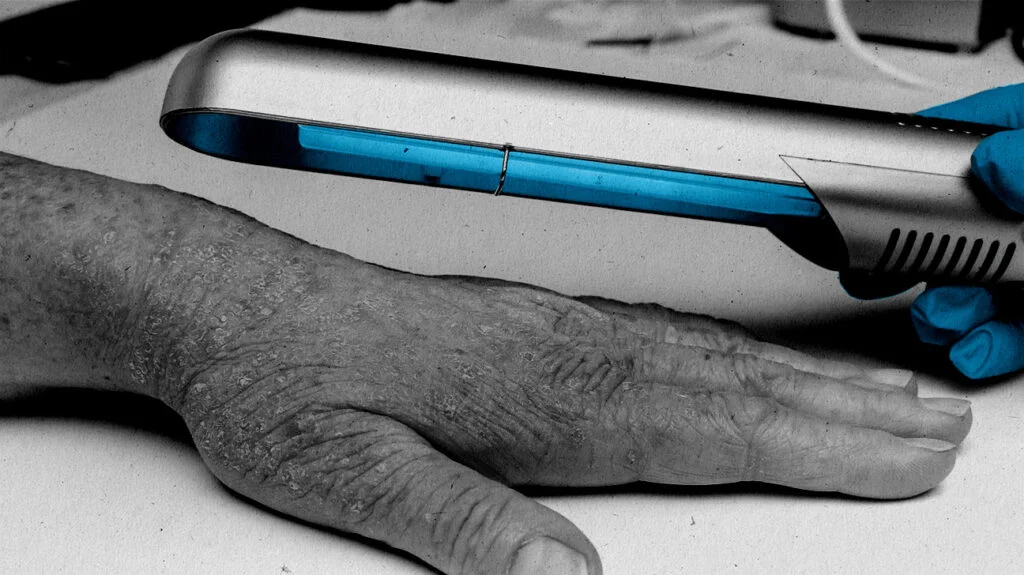
Phototherapy uses controlled ultraviolet light in a medical setting to calm skin inflammation. It can help adults who do not respond well to topical care or who are not ready for systemic medicine. Tanning beds are not a safe substitute for prescribed phototherapy.
What daily habits support prescription eczema treatment?
Use fragrance-free moisturizer, avoid harsh soaps, keep showers lukewarm, wear breathable fabrics, manage sweat quickly, and follow the medication schedule exactly. Daily care cannot replace advanced treatment for every adult, but it helps prescriptions work with less resistance.