Most people do not feel bad because they lack willpower. They feel bad because their daily food rhythm is quietly working against them. That is why essential nutrition advice matters more than trendy meal plans and dramatic detox talk. You do not need a fridge full of powders or a personality built around kale. You need a way of eating that keeps your energy steady, your brain clear, and your body out of constant repair mode.
I learned this the boring way, which is usually the real way. The weeks I skipped breakfast, lived on caffeine, and called crackers a lunch were the same weeks I felt foggy, snappy, and weirdly tired by 3 p.m. Food was not the whole story, but it was a bigger piece than I wanted to admit. A balanced diet is not about perfection. It is about giving your body enough of the right things often enough that it stops sending distress signals in low battery mode.
Public health guidance still comes back to the same core idea: eat a varied diet built around less processed foods, and keep excess sugar, salt, and unhealthy fats in check. That advice has survived every food trend for a reason.
Stop Treating Meals Like Emergency Repairs
Your body hates chaos more than the wellness crowd likes to admit. When you wait too long to eat, then inhale whatever is closest, you are not being “busy.” You are handing your mood and focus over to luck. Luck is a terrible nutrition plan.
Steady eating works because your body runs on timing as much as ingredients. A breakfast with protein and fiber, a real lunch, and a sensible dinner often do more for your day than any heroic health kick. You feel it in small ways first. Fewer cravings. Less afternoon irritability. Better decisions at 8 p.m. when the biscuit tin starts whispering.
A friend of mine used to skip lunch at work and then wonder why she demolished takeaway on the drive home. Once she started packing Greek yogurt, fruit, and a chicken wrap, the nightly food spiral eased within a week. Not glamorous. Very effective.
This is the unsexy truth: regular meals reduce drama. They also make portion control easier because you stop arriving at dinner like a starved wolf in office clothes. That matters.
If your current pattern is a mess, fix the rhythm before you obsess over details. Eat at roughly consistent times. Build meals that keep you full. Then improve from there.
Build Your Plate Like You Actually Want Energy
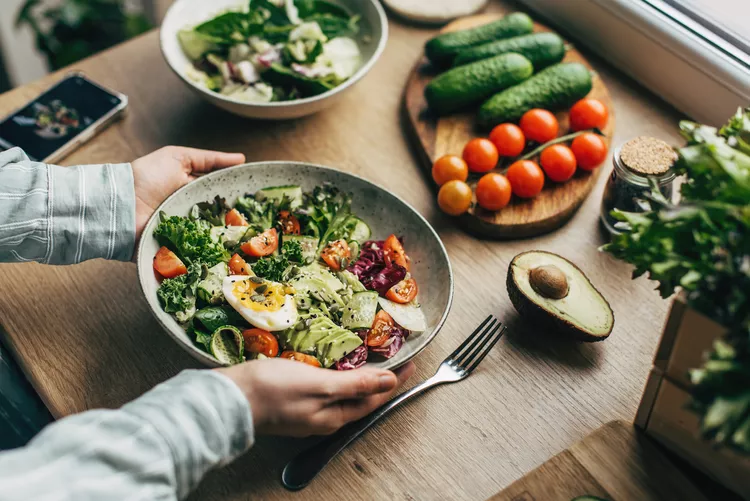
You do not need to count every gram to eat better, but you do need some structure. Random eating creates random results. A decent plate gives your body enough protein for staying power, enough fiber for fullness, and enough carbs and fats to keep you functioning like a person instead of a crashed browser.
I like a simple mental formula: half your plate from plants, one quarter from protein, one quarter from slower-digesting carbs, then add some healthy fat where it makes sense. It is not magic. It is just easier to repeat than complicated food math.
That might look like lentil curry with rice and cucumber salad. It might be eggs on wholegrain toast with tomatoes and avocado. It might be grilled fish, potatoes, and roasted carrots on a Wednesday when life feels especially ordinary. Ordinary meals hold lives together.
Diet quality matters because healthy eating patterns built around variety, balance, moderation, and diversity are consistently linked with better health outcomes. That is why broad guidance from bodies like WHO keeps pointing people back to whole grains, vegetables, fruit, legumes, nuts, and fewer heavily processed foods.
So yes, ingredients matter. But meal shape matters too. You are not just feeding hunger. You are feeding tomorrow morning’s focus, tomorrow afternoon’s patience, and next month’s blood work.
Learn the Difference Between “Healthy” and “Health Halo”
Food marketing lies with a straight face. A cereal box can look like it belongs in a yoga studio and still hit your bloodstream like dessert. A protein bar can carry more sugar than common sense. Packaging is a costume department. It is not evidence.
You need a better filter. Read the label, but do not worship the label. Ask a blunt question first: what is this actually made of? If the answer sounds more like a chemistry set than food, step back. If it is yogurt, oats, nuts, fruit, beans, eggs, rice, chicken, or bread you recognize, you are usually on firmer ground.
I once watched someone buy a “wellness smoothie” that had more sugar than a can of soda, then congratulate themselves for being disciplined. That is not stupidity. That is modern food culture doing what it does best.
One smart habit beats ten dramatic ones: compare products inside the same category. Pick the bread with more fiber. Pick the yogurt with less added sugar. Pick the peanut butter that is mostly peanuts, not dessert in disguise. Small switches stack up fast.
WHO’s current healthy diet guidance still warns that many people now eat too many foods high in free sugars, salt, and unhealthy fats while missing enough fruit, vegetables, and fiber. That pattern is common, and it often hides inside foods marketed as convenient or “better for you.”
Eat for the Week You Actually Live
A lot of nutrition advice falls apart because it assumes you have endless time, a spotless kitchen, and the emotional stamina of a monk. You do not. Most people are trying to eat well between work, family, deadlines, and those evenings when cooking feels personally offensive.
That means your system has to survive real life. Keep staples that bail you out without wrecking your goals: eggs, yogurt, tinned beans, frozen vegetables, fruit, oats, wholegrain bread, rice, nuts, and a few easy proteins. A kitchen with backup options is kinder than a kitchen built on fantasy.
My favorite test is simple: can you make three decent meals in ten minutes with what is already at home? If not, your plan is too fragile. Nutrition should bend. If it breaks every time you get busy, it was never a real system.
Healthy eating habits often come from reducing friction, not increasing motivation. Wash fruit when you bring it home. Cook extra rice on purpose. Keep chopped vegetables where you can see them. Put the biscuits somewhere mildly annoying to reach. You are not weak. You are human, and humans follow convenience.
The best diet is the one that still works on a tired Tuesday. Everything else is performance art.
Let Progress Be Boring, Repetitive, and Worth It
People quit nutrition plans for one reason more than any other: they expect a dramatic feeling too quickly. Then, when life stays ordinary, they assume nothing is happening. That is the trap. Good nutrition often improves your life in quiet ways first.
You sleep a little better. Your stomach stops complaining. You stop prowling for sugar at 10 p.m. Your mood evens out. Your jeans fit the same, then a bit better. The reward is often subtle before it becomes obvious.
This is where patience earns its keep. Do not judge your food choices by one meal or one day. Judge them by the trend. A takeaway on Friday does not ruin you. A decent breakfast on Monday does not save you either. Repetition decides the story.
I have seen people transform their week by changing only three things: adding protein to breakfast, eating vegetables at lunch, and drinking water before reaching for a second coffee. That sounds almost insultingly basic. It also works often enough to matter.
Here is my stance: if a nutrition plan makes you anxious, obsessed, or socially miserable, it is probably not healthy no matter how “clean” it looks. Food should support your life, not become your full-time identity.
That is the real win. You eat well enough, consistently enough, that wellbeing stops feeling like a project and starts feeling like your normal setting.
After all that, the point is not to become a perfect eater. The point is to become a stable one. Essential nutrition advice is not about chasing a shiny version of yourself who meal-preps like an influencer and never touches birthday cake. It is about building a pattern your body can trust.
Trust matters. When your meals stop swinging between neglect and overcorrection, your energy gets steadier, your cravings lose some of their drama, and your decisions stop feeling like daily moral tests. You finally get some breathing room. That is what everyday wellbeing looks like in real life: less chaos, more consistency, and a body that is not always trying to catch up.
I think the most underrated nutrition skill is not discipline. It is honesty. Honest shopping. Honest portion sizes. Honest awareness of how certain foods make you feel two hours later, not just during the first three bites. That kind of honesty changes more than guilt ever will.
So start small, but start properly. Pick three meals you can repeat this week. Stock your kitchen like someone who plans to care for themselves. Then keep going long enough to feel the difference. Essential nutrition advice only becomes useful when it leaves the page and lands on your plate.
What is the best everyday nutrition advice for beginners?
The best starting point is to stop chasing perfect eating and build regular meals first. Eat real food at consistent times, include protein and fiber, and make small upgrades you can repeat without drama.
How can I eat healthy every day without spending too much money?
You keep costs down by buying basics that stretch well: oats, eggs, beans, lentils, rice, yogurt, frozen vegetables, potatoes, and seasonal fruit. Fancy health foods are optional. Consistency is not.
What should a balanced plate look like for daily wellbeing?
A balanced plate usually includes vegetables or fruit, a satisfying protein source, a slower-digesting carb, and some fat. That mix helps steady energy, appetite, and focus better than random snacking.
Why do I feel tired even when I think I eat enough?
You may be eating enough calories but not enough quality food, protein, fiber, or iron-rich meals. Long gaps between meals can also leave you drained even when total intake looks fine.
Is snacking bad if I am trying to improve my nutrition?
Snacking is not the villain. Mindless snacking is. A planned snack like fruit and yogurt, nuts, or boiled eggs can keep you steady and prevent the evening food stampede.
How much protein do I need in everyday meals?
Most people do better when they spread protein across the day instead of dumping it all into dinner. You do not need bodybuilder portions, just enough to help fullness, muscle repair, and steadier energy.
Are processed foods always unhealthy for daily nutrition?
No. That idea is too simplistic. Frozen vegetables, canned beans, yogurt, and wholegrain bread are processed and still useful. The bigger issue is heavily processed foods loaded with sugar, salt, and low satiety.
What are healthy eating habits that actually last long term?
Lasting habits are boring in the best way. You shop for staples, repeat a few solid meals, keep backup foods ready, and stop relying on motivation to rescue you every evening.
How can I improve my diet when I have a busy schedule?
You need fewer decisions, not more ambition. Prepare one or two easy breakfasts, keep quick lunch options ready, batch-cook one dinner component, and make your kitchen do some of the work.
Does drinking more water really help with nutrition and wellbeing?
Yes, though people oversell it like a miracle. Good hydration helps appetite cues, digestion, energy, and concentration. It will not fix a bad diet, but it does make good habits easier to keep.
What foods support better mood and energy during the day?
Meals with protein, fiber, whole grains, fruit, vegetables, and healthy fats usually support steadier mood and energy. Ultra-sugary foods can feel good quickly, then leave you flat and cranky later.
How do I stay consistent with nutrition without becoming obsessed?
Set a few non-negotiables and leave room for normal life. Eat regular meals, keep decent food at home, and stop treating every indulgence like a moral failure. That balance keeps you sane.